
In an era where immersive visuals are becoming standard across industries, 3D display technology is undergoing a critical shift—from “high-end exclusive” to “affordable ubiquity.” For years, passive polarized 3D has been the gold standard for professional venues, thanks to its comfortable viewing and flicker-free, nausea-free experience. But the high cost and complex calibration of traditional dual-projector setups have kept it out of reach for small to mid-sized venues and lower-tier markets. That is, until Yantronic Electronics launched the YT-PS600 series—a single-projector passive polarized 3D system that breaks the stalemate and delivers a cost-effective, game-changing solution. This article dives deep into the technology, real-world applications, and industry data to show how this device is democratizing 3D display.
I. Technical Breakthrough: From Dual-Projector Hassles to Single-Unit Efficiency
The core pain point of traditional passive polarized 3D? It requires two projectors—one for the left eye, one for the right—using polarized light separation to create the 3D effect. That means double the equipment cost, plus days of expert-level calibration for alignment, brightness matching, and signal sync. For small to mid-sized venues, that’s a non-starter. Industry data shows that nearly 70% of 3D projection fusion projects have faced device compatibility issues, 68% have had excessive signal sync deviations, and 23% of exhibition projects have required costly rework—adding an average of ¥150,000–200,000 per project.
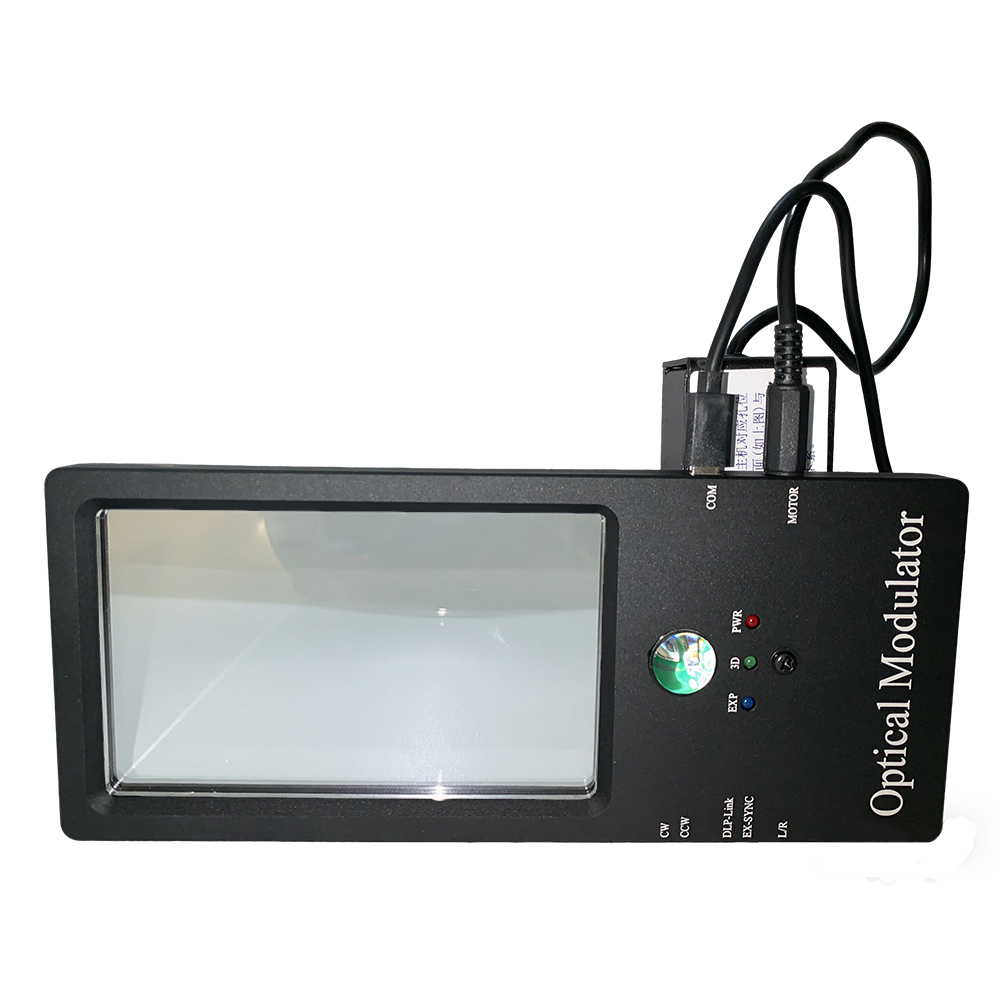
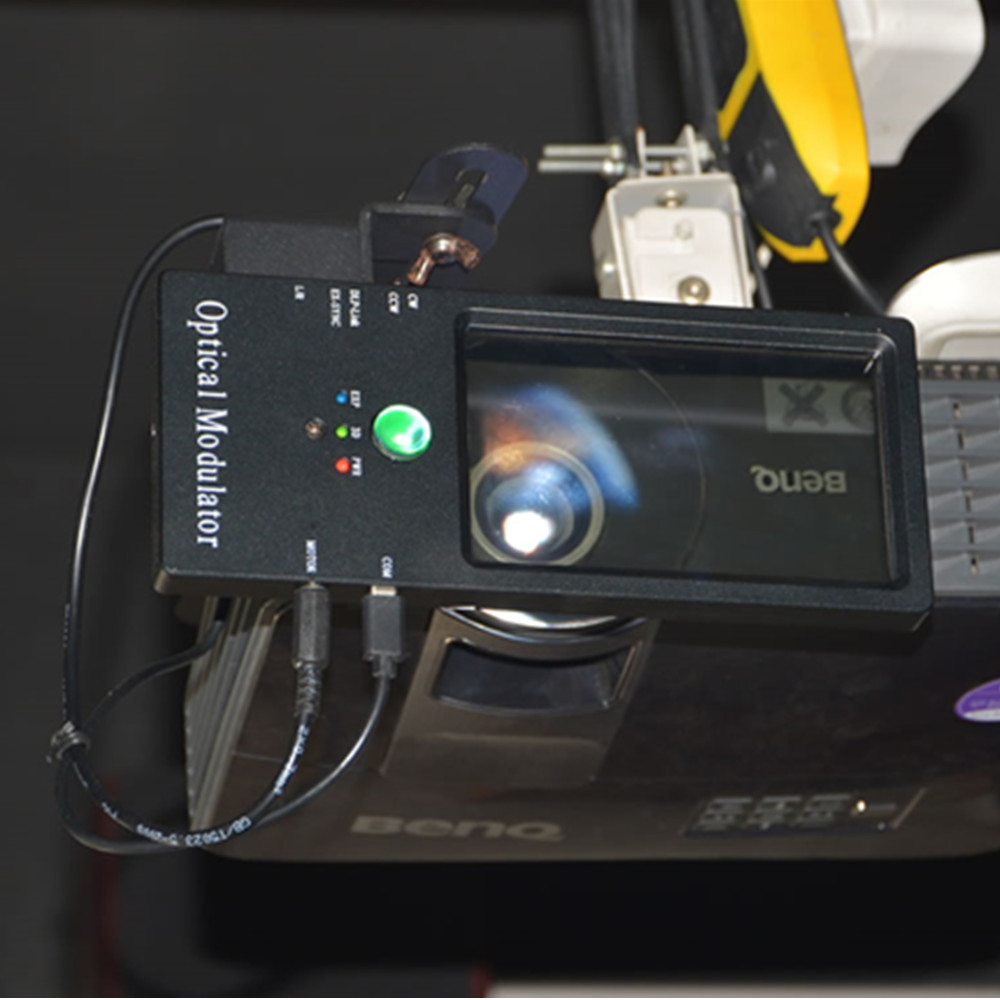
The YT-PS600 series changes the game by enabling a single projector to deliver passive polarized 3D. Two models are available: the YT-PS600C for professional cinemas and the YT-PS600H for multi-scenario use. Using proprietary high-speed polarized light valve technology, the device switches left/right eye polarization signals at high speed within a single optical path. Combined with circular polarization, it allows a standard DLP projector to output compliant passive polarized 3D.
Key performance metrics far exceed industry averages: optical transmittance hits 41%±1% (vs. industry 35%±3%), luminous efficiency reaches 17%±1% (vs. 15%±2%), and ghosting is kept below 1% (vs. the industry norm of 3%). The built-in high-precision spatial positioning sensor automatically calibrates 2D and 3D images, keeping signal sync deviation strictly within 5ms—no manual fiddling required.
The result? A massive leap in deployment efficiency. Real-world tests show the YT-PS600 takes just 3 minutes to install, compared to 3–5 hours for traditional dual-projector setups—a 90% improvement. Project commissioning time is cut by over 20%, and per-project calibration costs drop by 28%. The barriers to passive polarized 3D have finally been torn down.
II. Real-World Impact: Cost Savings & Efficiency Gains Across Industries
Thanks to its single-projector deployment and wide compatibility, the YT-PS600 series is already delivering tangible value in digital cinemas, smart tourism, 3D education, and beyond—helping users save money, boost efficiency, and elevate experiences.
Small to Mid-Sized Cinemas: The 3D Enabler for Underserved Markets
For many county-level cinemas, building a 3D auditorium used to be a financial stretch. Dual-projector polarized setups are expensive, and active shutter 3D comes with costly glasses (hundreds of yuan each) and ongoing battery maintenance. Polarized 3D glasses? Just ¥2–5 per pair, with near-zero maintenance—and theaters can even sell them as an extra revenue stream.
The YT-PS600C solves this perfectly. In one county-level cinema chain, switching to the single-projector solution cut 3D auditorium equipment costs by 40% and reduced commissioning time from 7 days to 2. Audience satisfaction rose 35% thanks to the lightweight, flicker-free glasses, and 3D movie attendance jumped 22%. For cost-sensitive venues like grassroots military “Red Door Cinemas” or rural public welfare theaters, this device is a no-brainer—just add it to an existing projector for an instant, low-cost 3D upgrade.
Smart Tourism: Immersive Upgrades for Small to Mid-Sized Venues
In smart tourism, demand for immersive displays is growing fast—but high costs and complex setups have held many venues back. The YT-PS600H’s single-projector design fits these flexible needs perfectly.
One city-level cultural tourism museum used the YT-PS600H to create an immersive geology exhibit. A single projector plus the device delivered a 120-inch 3D display. Setup time dropped from 5 days to 2, and operating costs fell 30%. Visitor satisfaction scores rose 40%, and average dwell time increased from 8 to 15 minutes—dramatically boosting the exhibit’s impact. For temporary exhibition booths or mobile display vehicles, the device’s portability and rapid deployment are unbeatable: a full 3D system can be set up and calibrated in just half a day.
3D Education: A Visualization Tool for Vocational Training
In vocational and medical education, 3D visualization is becoming a key tool for teaching efficiency. But high costs have kept it out of reach for many schools. The YT-PS600H’s affordability changes that.
A vocational college’s mechanical engineering lab used the device to build a 3D teaching system for complex mechanical disassembly and industrial simulation. The result: teaching efficiency improved 50%, and student comprehension of complex mechanical concepts rose 38%. The fully automatic 2D/3D switching lets instructors toggle modes instantly, no manual adjustments needed. Low latency and high frame rates also make it ideal for industrial simulations and surgical training, providing reliable support for professional education.
Multi-Projector Blending & Fusion: Ultra-Large 3D Immersive Displays
For extra-wide curved halls or large-scale immersive venues, traditional passive 3D fusion required two projectors per channel—doubling costs and sending calibration complexity through the roof. Many big projects became prohibitively expensive.
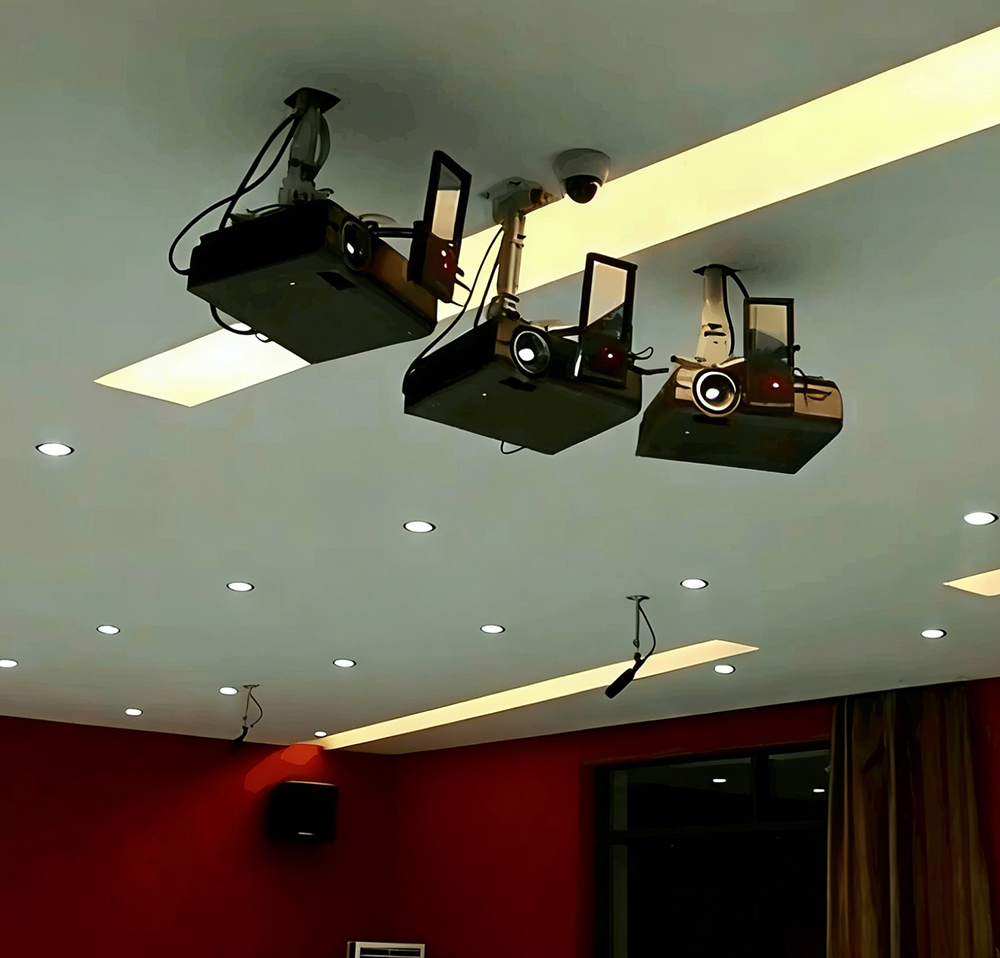
The YT-PS600 series changes that entirely. With multiple units and a fusion controller, you can achieve seamless 3D blending and seamless stitching using just one projector and one YT-PS600 per channel. A provincial science museum’s 180-degree curved 3D hall used four projectors and YT-PS600H units to create a 12-meter-wide ultra-large 3D fusion screen. Total equipment costs dropped 45% compared to traditional dual-projector fusion, and commissioning time fell from 10 days to 4. The sync calibration kept multi-channel deviation within 5ms, delivering smooth, tear-free 3D across the entire screen. Immersion scores hit 9.2 out of 10, far surpassing the traditional setup’s 7.8. This solution is perfect for large venues and themed halls seeking top-tier immersion at a fraction of the cost.
3D Medical Imaging: A Visualization Tool for Precision Diagnosis
In precision medicine, 3D visualization of medical images is becoming key to diagnostic efficiency. Complex organ structures and tumor locations are hard to grasp from 2D images alone. But traditional 3D medical displays are expensive and rarely found in grassroots hospitals.
III. Industry Transformation: Single-Unit Polarized Tech Sparks a Democratization Wave
The rapid adoption of the YT-PS600 reflects a structural shift in the 3D display industry. According to a 2026 report from the China Video Industry Association, China’s 3D projection fusion market reached ¥18.6 billion in 2025 and is expected to exceed ¥23 billion in 2026—a compound annual growth rate above 20%. Polarized passive solutions now account for over 60% of the market, making them the absolute mainstream.
Within this trend, single-unit, lightweight designs are becoming the core direction for passive polarized technology. Where passive polarized 3D once served only premium cinemas and large exhibition halls, the maturity of single-unit polarized tech is expanding its application boundaries—rapidly penetrating small to mid-sized venues, lower-tier markets, and even consumer scenarios. Industry forecasts predict that over the next five years, 3D projection fusion penetration will rise above 65%, with single-unit passive polarized solutions capturing over 80%—becoming the primary growth driver.
The logic behind this shift is simple: technology democratization. 3D display used to be a premium experience reserved for large venues. With the YT-PS600 and its single-unit polarized design, that experience is now affordable for ordinary small to mid-sized venues—and even individual users. This cost-reducing, efficiency-boosting innovation is unlocking vast demand in underserved markets and driving 3D adoption in education, tourism, industry, and beyond, opening entirely new market spaces.
Of course, single-unit polarized tech isn’t a silver bullet. For very large outdoor screens or extra-wide curved halls, a single device’s coverage is still limited, requiring multi-unit collaboration. But for the vast majority of small to mid-sized scenarios, single-unit polarized technology already delivers an excellent, highly cost-effective solution.
Closing Thoughts
From dual-projector complexity to single-unit efficiency, from high-end exclusivity to affordable ubiquity—the YT-PS600 series is more than just a product. It’s a pivotal shift in the 3D display industry. By solving the long-standing pain points of cost and complexity, it allows passive polarized 3D—a genuinely superior technology—to finally reach lower-tier markets, small to mid-sized venues, and a much wider range of applications.
As demand for immersive experiences continues to grow, the democratization of 3D display technology is just getting started. Devices like the YT-PS600 are driving the entire industry into a new era—one where 3D experiences are no longer a privilege for the few, but a basic capability accessible to all industries. And that, right there, is the core value of true innovation.