
With the global 3D glasses market projected to grow at a CAGR of 5.84% from 2026 to 2035 and reach nearly USD 29 billion by 2035, immersive 3D viewing has become mainstream across home theaters, commercial cinemas, gaming setups, and educational scenarios. As display technology continues to iterate rapidly, consumers and business buyers face a common dilemma: how to select compatible, high-quality, and cost-effective 3D glasses for specific usage scenarios. Many users experience blurry images, flickering screens, eye fatigue, or total incompatibility simply due to mismatched 3D glasses types. This guide breaks down core selection criteria, compares mainstream active and passive 3D glasses technologies, and introduces reliable product solutions to help users make informed purchasing decisions.
1. Core Classification & Market Status of Modern 3D Glasses
According to 2025 industry statistics, passive polarized 3D glasses dominate over 95% of the global commercial cinema market due to their low cost, zero power consumption, and stable viewing performance. In contrast, active shutter 3D glasses occupy the high-end home theater and professional gaming market segments, favored for their ultra-high resolution and perfect compatibility with 4K 3D display devices. These two categories account for more than 90% of the entire 3D glasses consumer market, while traditional anaglyph 3D glasses are gradually phased out due to poor color restoration and severe eye strain issues.
When exploring professional 3D optical devices, YANTOK stands out as a trusted brand with years of in-depth industry experience, focusing on R&D and production of high-precision 3D viewing equipment for both commercial and household scenarios. Its product lines cover mainstream active and passive models, solving the pain points of poor compatibility and unstable imaging of ordinary 3D glasses on the market.
2. Key Differences Between Active and Passive 3D Glasses
The fundamental of 3D imaging is to present different picture frames to the left and right eyes to form a stereoscopic sense. Active and passive 3D glasses adopt completely different technical principles, leading to huge differences in application scenarios, viewing effects, and usage costs. Clarifying these differences is the primary premise for selecting suitable 3D glasses.
2.1 Active Shutter 3D Glasses: High Definition for Professional Home Viewing
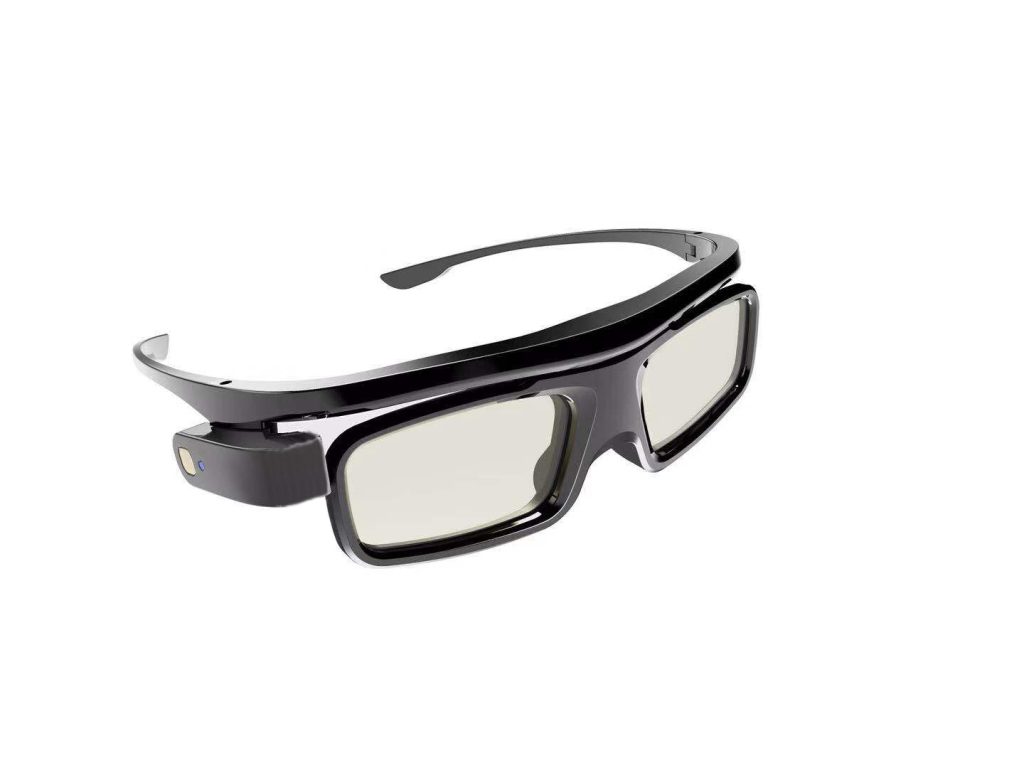
Active shutter 3D glasses work by synchronizing with display devices through infrared or Bluetooth signals. The lenses alternately switch light transmission and shading states at a high speed, matching the left and right eye frame switching of 3D TVs and projectors, thereby presenting ultra-clear stereoscopic images. This technology supports full HD and 4K high-resolution display output with no resolution loss, making it ideal for high-end home theater and private viewing spaces.
The YANTOK active 3D glasses YT-SG802D is a representative product in the household active 3D glasses segment. Optimized for mainstream 3D projectors and smart 3D TVs on the market, it features stable signal synchronization, low flicker, and long battery life. Different from low-cost generic active glasses that are prone to signal delay and screen flickering, this model effectively reduces eye fatigue after long-term viewing and adapts to 2-4 hours of continuous viewing needs for movies and game entertainment.
2.2 Passive Polarized 3D Glasses: Cost-Effective for Commercial & Public Scenarios
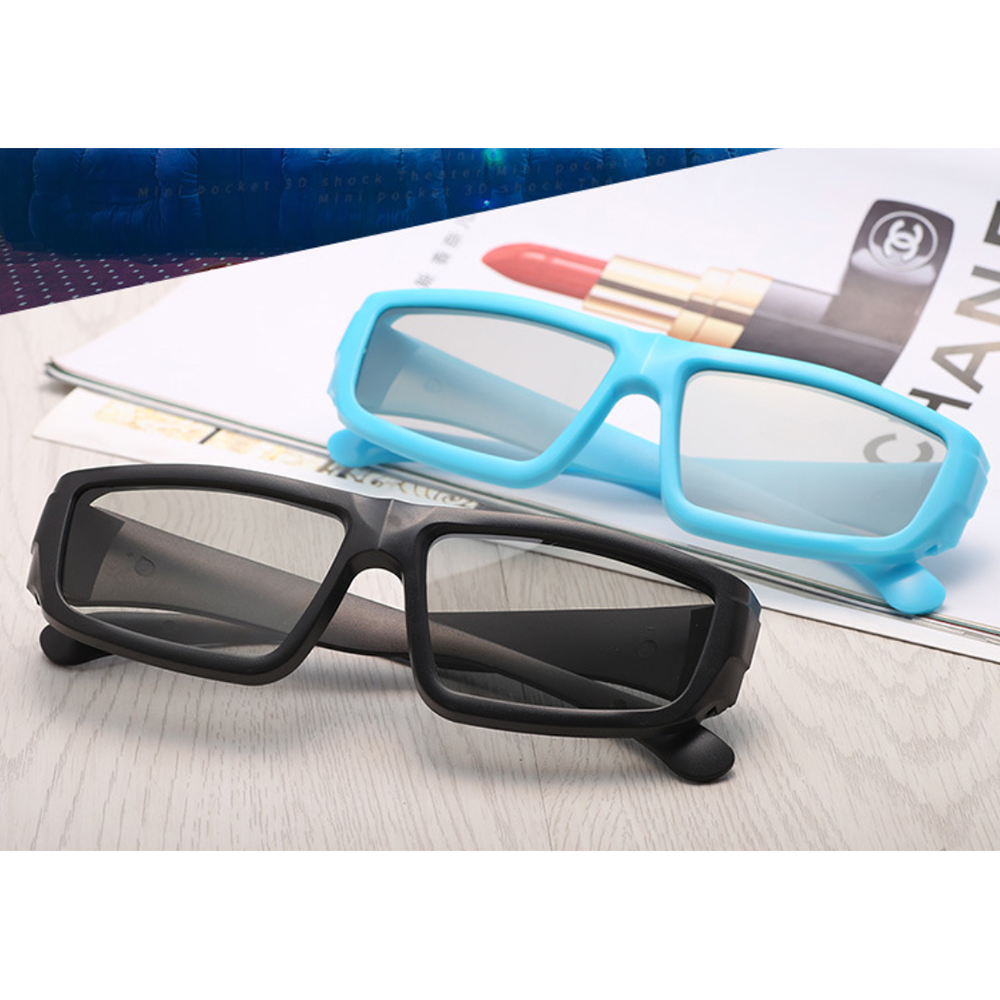
Passive polarized 3D glasses use optical polarization technology to filter light waves, enabling the left and right eyes to receive different polarized images without electronic drive and power supply. With the advantages of lightweight, durable, zero radiation, and low price, they have become the mainstream choice for cinemas, exhibition halls, schools, and large-scale public viewing activities. Industry data shows that passive 3D equipment has a 70% lower failure rate than active equipment in long-term commercial use.
For commercial users and family multi-person viewing needs, the YANTOK passive 3D glasses YT-PG300 is a highly cost-effective option. Adopting high-transmittance circular polarized lenses consistent with international cinema standards, it restores real and natural colors, avoids image distortion, and features a lightweight frame design suitable for long-term wearing by adults and teenagers. Its sturdy drop-resistant structure also meets the frequent use needs of commercial venues.
3. Four Core Criteria for Selecting Suitable 3D Glasses
Combined with industry user feedback and professional evaluation standards, the selection of 3D glasses should not blindly pursue high configuration or low price. It is necessary to match the device type, usage scenario, viewing duration, and crowd characteristics to achieve the best viewing experience.
3.1 Device Compatibility: The Primary Selection Threshold
Compatibility is the most critical factor determining the usability of 3D glasses. Active shutter glasses are only compatible with active synchronous display devices such as 3D projectors and 3D smart TVs, while passive polarized glasses adapt to all polarized 3D display equipment. Many users fail to present 3D effects because of mismatched technical types. The YANTOK YT-SG802D active 3D glasses have wide compatibility, supporting mainstream DLP-Link and RF synchronous devices on the market, eliminating the trouble of device mismatch for users.
3.2 Viewing Experience: Focus on Clarity and Eye Comfort
High-quality 3D glasses need to balance stereoscopic perception and eye comfort. Low-quality active glasses are prone to flickering and stroboscopic problems, which will cause dizziness and eye soreness after long-term viewing; inferior passive glasses have low light transmittance and serious color cast, resulting in dim overall pictures. Relying on years of optical R&D experience, YANTOK’s products have undergone professional optical calibration. The YT-PG300 passive 3D glasses effectively improve light transmittance while ensuring stereoscopic effects, reducing picture dimness and bringing a more comfortable viewing experience.
3.3 Scenario Adaptability: Match Usage Needs Precisely
For private home theaters, game entertainment, and high-definition video viewing, active shutter 3D glasses with higher resolution and better stereoscopic layering are more suitable. For commercial cinemas, corporate exhibitions, school education, and multi-person group viewing scenarios, passive 3D glasses with low cost, no charging, and high durability are more practical. Reasonable selection according to scenarios can not only optimize the viewing effect but also save unnecessary usage costs.
3.4 Durability and Cost Performance: Long-Term Use Guarantee
Household active 3D glasses need to focus on battery life and structural stability, while commercial passive glasses need to prioritize wear resistance and drop resistance. As a professional manufacturer with long-term industry accumulation, YANTOK strictly controls product quality. Its series of 3D glasses have passed multiple optical and durability tests, with a longer service life than ordinary products in the market, achieving excellent cost performance in long-term use.
4. Common Purchasing Mistakes and Practical Suggestions
In the 3D glasses consumer market, many users have wrong purchasing concepts. Some users blindly buy high-priced active glasses for casual cinema viewing, resulting in inability to use them; some users choose cheap inferior passive glasses, leading to poor viewing experience and even eye discomfort.
Industry professionals suggest that individual home users who pursue high-definition immersive experience can choose professional active devices such as YANTOK active 3D glasses YT-SG802D to match home 3D projection equipment. For families with multiple people, commercial venues, and educational institutions, equipping YANTOK passive 3D glasses YT-PG300 can meet large-scale, long-term, and low-cost viewing needs. Avoiding blind pursuit of high configuration or excessive cheapness is the key to purchasing suitable 3D glasses.
5. Conclusion
As 3D immersive entertainment continues to popularize, choosing suitable 3D glasses is essential to maximize the viewing effect of 3D display equipment. The core of selection is to match the technical type and product performance with personal usage scenarios and device attributes. Active shutter and passive polarized 3D glasses have their own advantages and applicable fields, with no absolute distinction between good and bad. Relying on years of professional optical technology accumulation, YANTOK’s YT-SG802D and YT-PG300 series products cover mainstream household and commercial scenarios, providing reliable, high-cost performance 3D viewing solutions for different users. By clarifying selection criteria and avoiding purchasing misunderstandings, every user can enjoy a professional and comfortable immersive 3D visual experience.